
Autism is Not Linear
When we say Autism is a spectrum, we do not mean a straight line from “a little Autistic” to “very Autistic.”
Autism is not linear.
Instead, Autism looks more like a profile or a mix of traits, where each person has different strengths, challenges, and support needs.
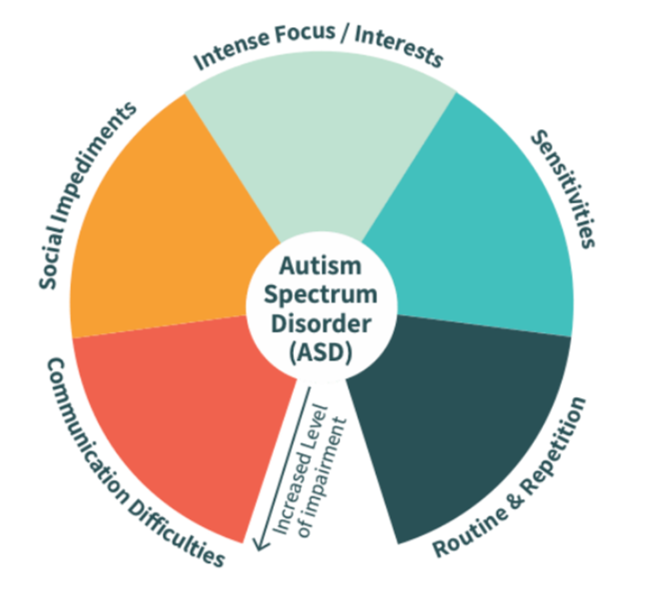
What the circle shows
This circle represents different parts of Autism, such as:
- Communication
- Social interaction
- Sensory sensitivities
- Routines and repetition
- Intense focus or interests
Every Autistic person has some combination of these, but not in the same way or to the same degree.
Why this matters
Two people can both be Autistic and:
- One may communicate easily but struggle with sensory overload
- Another may have strong routines and intense interests but need help with communication
- Someone may need a lot of support in one area and very little in another
There is no single “Autistic look” or behavior.
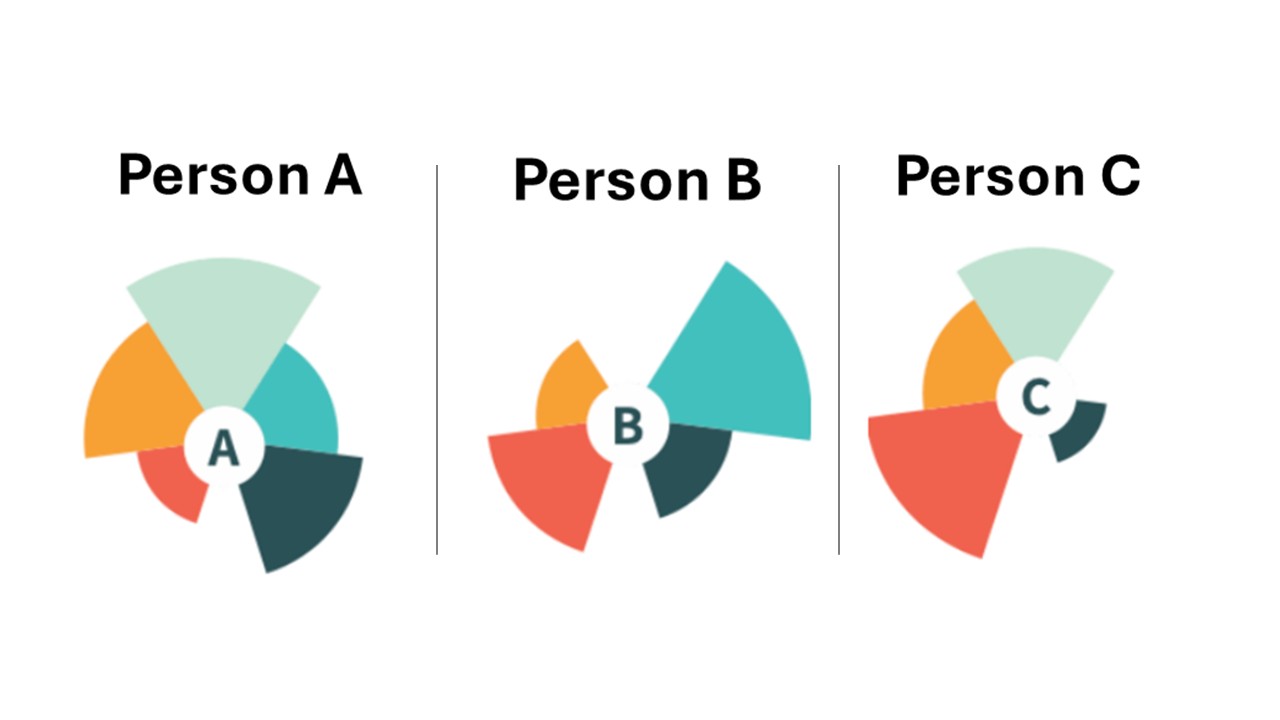
The examples labeled A, B, and C show three different Autistic people.
- Person A may have:
- Intense interests
- Strong need for routine
- Social challenges
- Person B may have:
- Communication difficulties
- Sensory sensitivities
- But fewer challenges with routine
- Person C may have:
- Intense interests
- Communication differences
- But not the same sensory or social needs as others
All three people are Autistic—just in different ways.
Autism isn’t a straight line—it’s a unique combination of traits for each individual.